EU MDR Cybersecurity: Safeguarding Medical Devices in the Digital Age

In the fast-paced world of healthcare, there are always concerns regarding any new medical device. The concern about cybersecurity in medical devices or, in plainer words, getting hacked or getting your data out on the internet is a new addition to that.
In this regard, the European Union’s (EU) Medical Device Regulation (MDR) works like a safety net for medical devices, ensuring they perform well and are safe to use and are safer overall. With healthcare getting more digital and AI health services booming, plus all those interconnected medical devices and apps, cyber-attacks have become a very real concern.
Both EU MDR and FDA have addressed the issue, with the EU honing in on cybersecurity and publishing an MDCG guidance document on Cybersecurity in medical devices.
You know, the reason they’re putting a bigger spotlight on cybersecurity in the EU MDR is because cyber-attacks are getting sneakier and more frequent. Bad actors are now eyeing healthcare groups and medical devices, which puts patients, personal info, and the whole healthcare system at risk. In response, the EU MDR has gotten strict about cybersecurity rules. They want to make sure medical devices are designed, made, and used in a way that’s totally secure.
The EU MDR guide puts a lot of pages into talking about cybersecurity. They’re underlining how big of a deal this is. Now, medical device manufacturers need to think about cybersecurity right from the start when they’re designing things. So. you need to follow the General Safety and Performance Requirements (GSPRs) to stay on the good side of the rules. And that includes sticking to the cybersecurity guidelines they’ve laid out in Annex 1.
According to the guidance document, the cybersecurity requirements fall right along with the general safety and performance requirements.
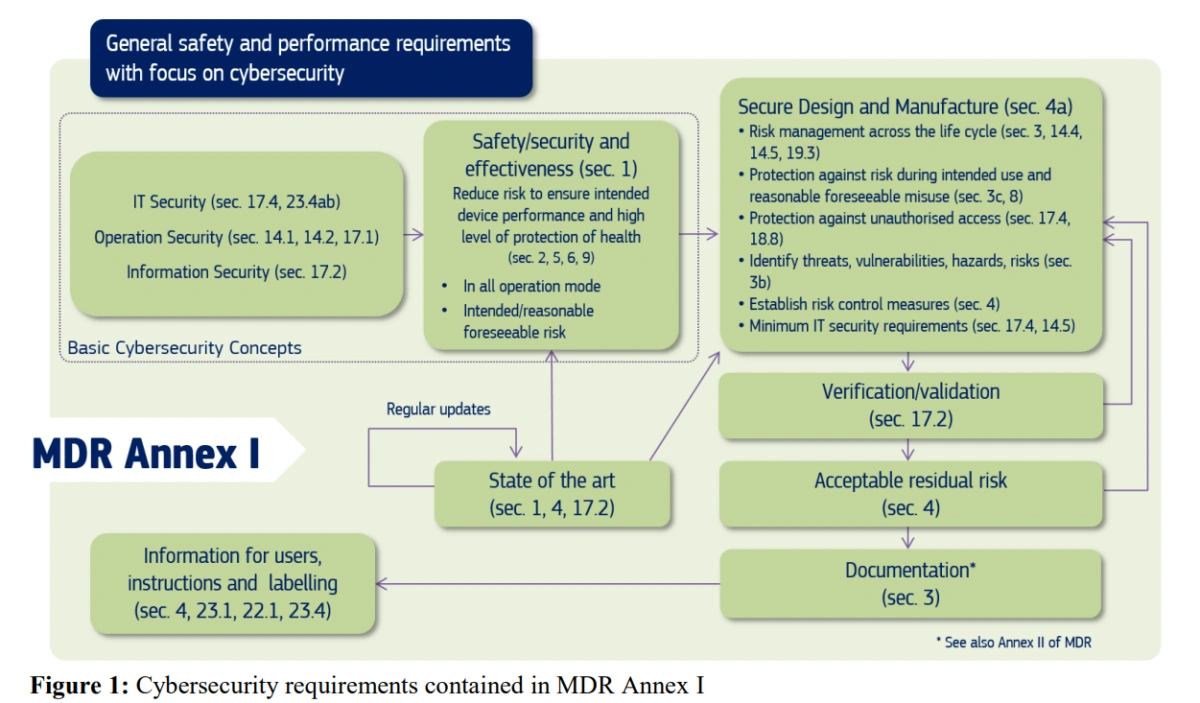
The EU MDR current annexes do have much of the required data you need for cyber protection. Apart from the one that was mentioned in the above picture, you would have to be especially aware of the following ones:
The clock’s already ticking on making medical devices more cyber-safe. The EU MDR was already a bit late, considering it was supposed to launch. However, it did come into play on May 2021. But a grace period allows manufacturers to sell older devices that got the green light under the old Medical Device Directive (MDD).
The cybersecurity requirement applies to both old and new devices. All devices have to be prepared to prevent risk to client usage and data protection.
If manufacturers want to do this cybersecurity thing right, they must get familiar with the rules and standards.
First, you are expected to learn about basic cybersecurity concepts. These include IT Security, Information Security, Operation Security, Intended use, Operating environment, operator, etc.
The point is not just to know about these but to understand how all of these contribute to the security of the device and how, as a manufacturer, you need to control and predict all the factors affecting each of these basic concepts to make sure your device is safe.
For example, much of how a device performs depends on the operator. So, the manufacturer has to control the factors and events that could go wrong at this level for optimum medical device cybersecurity. He has to:
This is just one aspect. There have to be similar levels of involvement in all aspects to ensure security risk management.
So, obviously, manufacturers have to get serious about cybersecurity risks from the beginning and ensure their devices are safe from the get-go. They’ve got to figure out the security risks and build in safety features. Plus, testing and scanning are key to making sure devices can handle attacks. Bringing in outside experts for this can really help.
The key to ensuring your device is completely safe you have to focus on secure design and manufacturing. The GSPR guidance documents suggest you do it like this.
This step is all about ensuring that security-related stuff is well-planned, documented, and put into action throughout the product’s whole life.
Next are the steps to figure out what security features are necessary. We’re looking at protecting the medical device’s data, functions, and services. This can include authentication, encryption, auditing, authorization, and other security measures.
The security really comes down to how strong the device was made. This idea is about making sure it’s strong from the inside out, like defense in depth.
Now it’s time to put the plans into action! This means putting cybersecurity features into the medical device. It’s one of the most important security risk management process steps. This mostly includes the tech stuff – both the hardware and the software. But if we’re using external components, we will need to follow the number one rule.
Now it’s time for testing! If you have people who can try and hack into your system, ethical hackers, this is the time to call them. You want all the networked medical devices to be tested and the device safety verified.
Your cybersecurity system is only as good as its security vulnerabilities. So, you have to make sure there are systems in place for when things go haywire. This step is for building a troubleshooting system.
This step ensures that any updates or fixes regarding security are tested and shared with users quickly. This is how you ensure that all connected medical devices are safe and protected.
The last and very important step is to create a manual. It can be a user manual. It tells you how to set up, configure, and keep the cybersecurity system functional and updated.
As different medical devices are developing, especially the ones with AI, cybersecurity in med-tech will be even more vital in the coming years. Manufacturers need to be proactive about cybersecurity, thinking about it from the first sketches until the device is no longer being sold or even after that.
Here at cite medical, we’re all about safety and performance. Our experts can guide startups, small businesses, and big players to create safe devices and fight off cyber threats. If you want to dive into the world of EU MDR cybersecurity compliance, reach out to us today. We’re here to help!